
Overview of Pharmaceutical Tablet Coating
Tablet coating adds a protective surface layer to solid-dose products. The coating approach affects how tablets should be handled, protected, and packed. For pharmaceutical production, downstream equipment must maintain tablet integrity during blister sealing, cartoning, and other packaging operations.
What Is Film Coating?
Film coating applies a relatively thin protective layer around a tablet. It can support tablet handling and help protect the tablet surface during downstream processing. Packaging equipment should provide controlled handling and reliable sealing to prevent damage to the coated surface.
What Is Enteric Coating?
Enteric coating is used when a tablet requires protection from the stomach before releasing its contents further along the gastrointestinal tract. This makes careful handling and protective packaging important, particularly when selecting blister packing equipment for pharmaceutical products.
Primary Objectives of Coating Tablets
Tablet coating may support several production and handling objectives:
- Protect the tablet surface during processing and packaging.
- Maintain physical integrity during blister filling, sealing, and cartoning.
- Support product protection against handling-related damage and environmental exposure.
- Improve packaging reliability by matching the tablet format with suitable downstream equipment.
- Preserve quality during distribution through secure, tamper-evident packaging formats.
For coated tablets, a suitable pharmaceutical packaging line should combine accurate filling, consistent sealing, hygienic operation, and compliance with las normas GMP, FDA y OMS.
Enteric Coating vs. Film Coating: Key Differences
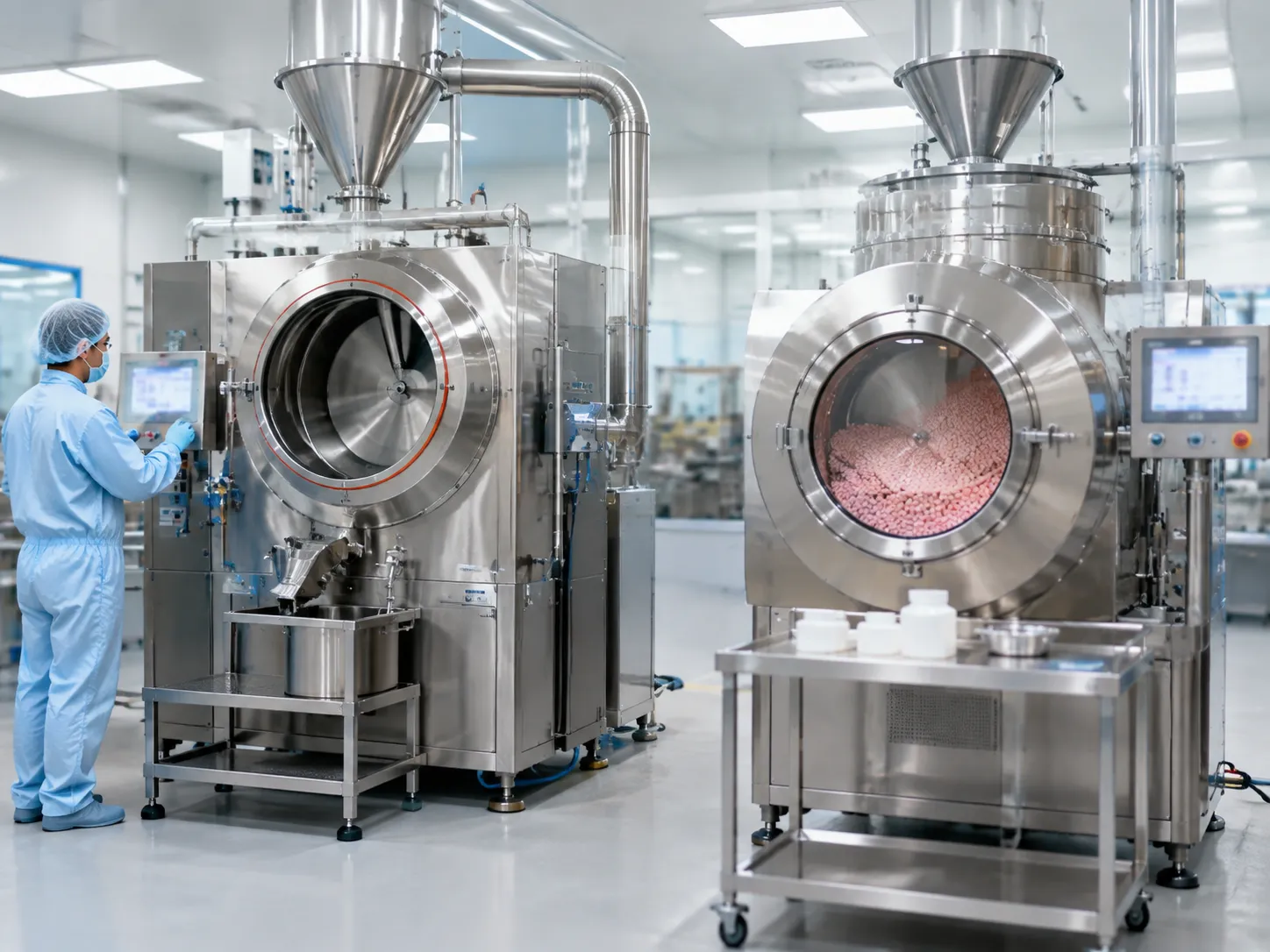
Dissolution Site and Release Mechanism
The main difference is where the tablet coating is designed to dissolve:
| Factor | Film coating | Enteric coating |
|---|---|---|
| Primary release goal | Supports standard tablet protection and handling | Delays release until the tablet reaches the intestine |
| Stomach exposure | Usually allows normal release according to the formulation | Designed to provide protection from stomach conditions |
| Packaging focus | Protect the coated surface during filling and sealing | Protect the coating from abrasion, moisture, and handling damage |
Enteric coating is selected when stomach acid protection or intestinal dissolution is important. Film coating is generally used when the tablet does not require delayed release.
Coating Materials and Polymers Used
Film and enteric coatings use different coating systems because they serve different functions. A film coating may support appearance, handling, and basic surface protection. An enteric coating requires a system designed to resist stomach conditions and support later intestinal release.
The exact materials and polymer combination depend on the active ingredient, tablet formulation, stability requirements, and validated process. These variables should be confirmed during formulation development and sample testing rather than assumed during equipment selection.
Coating Thickness and Weight Gain
Coating thickness and weight gain affect tablet size, surface coverage, handling, and release performance. Film coating typically focuses on consistent coverage and a stable tablet surface. Enteric coating requires closer control because uneven coverage can affect gastric resistance and intestinal release.
For downstream packaging, I assess:
- Tablet dimensions after coating
- Surface strength and sensitivity
- Uniformity of coating coverage
- Risk of abrasion during feeding and blister sealing
- Moisture and tamper protection needs
Blister packing equipment should handle coated tablets carefully and maintain accurate product placement. Qualipak blister packing systems support filling accuracy of up to 99.5%, helping protect solid-dose product quality during the packaging stage.
Manufacturing Complexity and Production Cost
Enteric coating usually requires more process control and validation because the coating must provide a specific release function. Film coating may be simpler when the primary purpose is tablet protection, appearance, or handling.
Cost is influenced by:
- Formulation and coating requirements
- Process validation needs
- Tablet handling sensitivity
- Packaging format
- Inspection and quality-control requirements
- Line speed and changeover needs
A modular packaging line can support faster size changeovers, simpler cleaning, and reduced maintenance labor. For pharmaceutical operations, I also consider GMP, FDA, and WHO requirements, ISO 9001-certified manufacturing, and CIP/SIP protocols where applicable to the overall line design.
Advantages and Use Cases of Film Coating
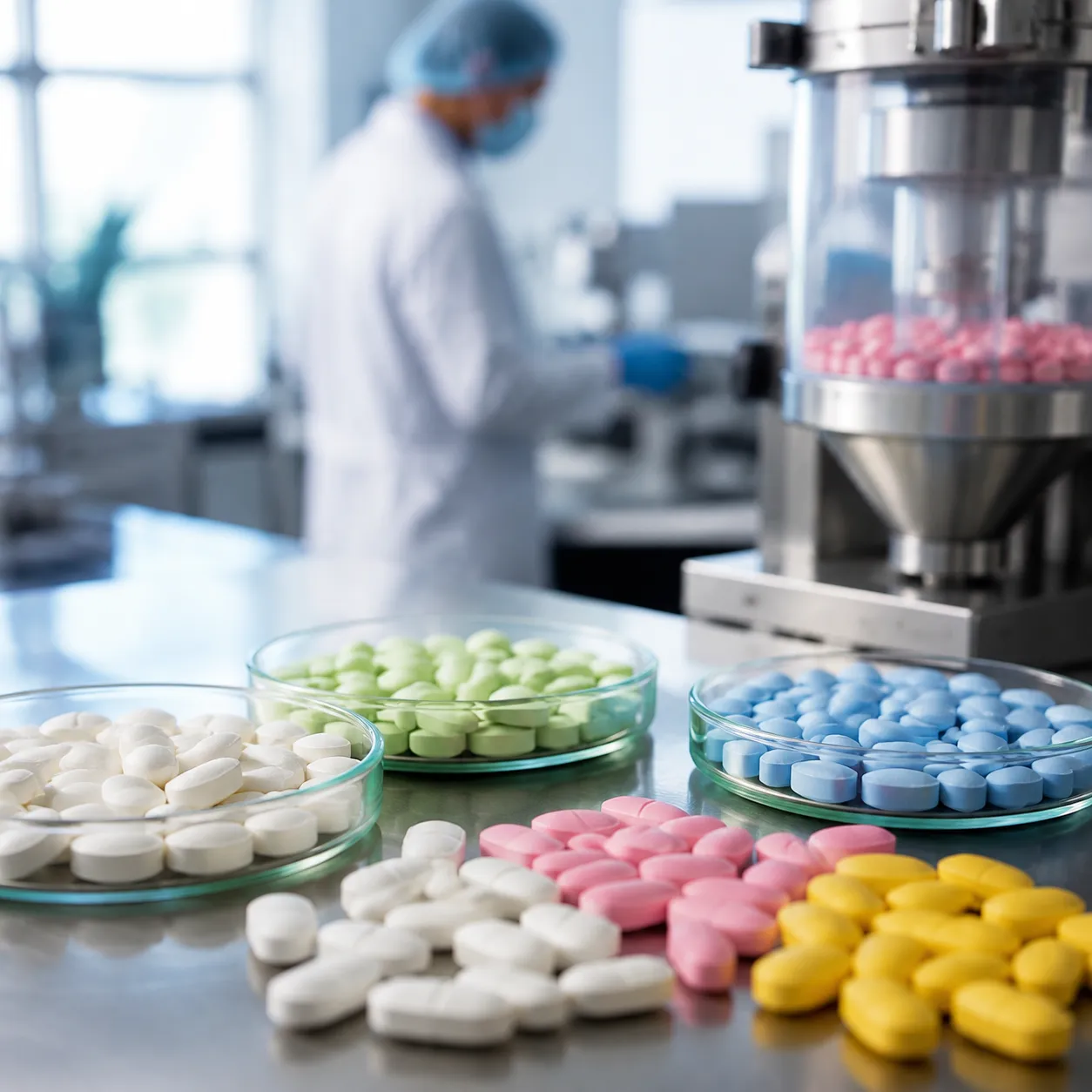
Key Benefits of Film Coating
Film coating supports a consistent tablet surface, but its integrity must be maintained during downstream handling. We configure pharmaceutical packaging lines to reduce unnecessary contact and protect coated tablets through filling, sealing, and secondary packaging.
Key packaging benefits include:
- Coating protection: Controlled transfer helps limit chipping and surface damage.
- Accurate blister loading: Blister packing systems deliver up to precisión de llenado del 99.5%, con tolerancia por debajo de 0.5%.
- Secure presentation: Sealed blisters provide visible, tamper-evident protection.
- Efficient line integration: Modular equipment enables faster size changeovers, easier cleaning, and reduced maintenance work.
- Compliance support: Systems are designed around GMP, FDA, and WHO requirements under ISO 9001 quality management.
Ideal Applications and Formulations
Film-coated tablets are suited to solid-dose products that require reliable physical protection throughout packaging, storage, and distribution. The specific coating formulation and release profile must be confirmed by the pharmaceutical manufacturer before line selection.
| Application need | Packaging consideration |
|---|---|
| Sensitive tablet surfaces | Gentle feeding and controlled product transfer |
| Consistent blister presentation | Accurate tablet placement and secure sealing |
| Multiple tablet sizes | Modular tooling and fast format changeovers |
| Regulated pharmaceutical production | GMP-aligned operation and documented testing |
| Export and distribution | Blister protection with integrated cartoning |
Al comparar enteric coating vs. film coating to choose the right tablet coating packaging machine equipment, focus on tablet dimensions, surface sensitivity, blister format, required output, cleaning procedures, and secondary packaging. Qualipak supports layout review, customized engineering, Factory Acceptance Testing, commissioning, free sample testing, and integrated blister-to-carton solutions.
Advantages and Use Cases of Enteric Coating
Key Benefits of Enteric Coating
Enteric-coated tablets require careful downstream handling to help maintain their protective surface during filling, sealing, storage, and transport. For pharmaceutical manufacturers, the packaging line should support:
- Coating integrity: Gentle tablet handling helps reduce surface damage during packaging.
- Protection from external conditions: Properly sealed packs help limit exposure to moisture and other environmental factors.
- Product visibility and control: Blister packaging provides a secure, visible format for solid-dose products.
- Reliable filling: Blister packing systems can achieve up to precisión de llenado del 99.5%, supporting consistent tablet placement.
- Regulated production: Pharmaceutical lines should align with las normas GMP, FDA y OMS, with ISO 9001-certified engineering support.
Nuestro blister packaging equipment is suitable for tablet and capsule applications where physical protection and dependable sealing are key priorities.
How to Choose Between Film Coating and Enteric Coating
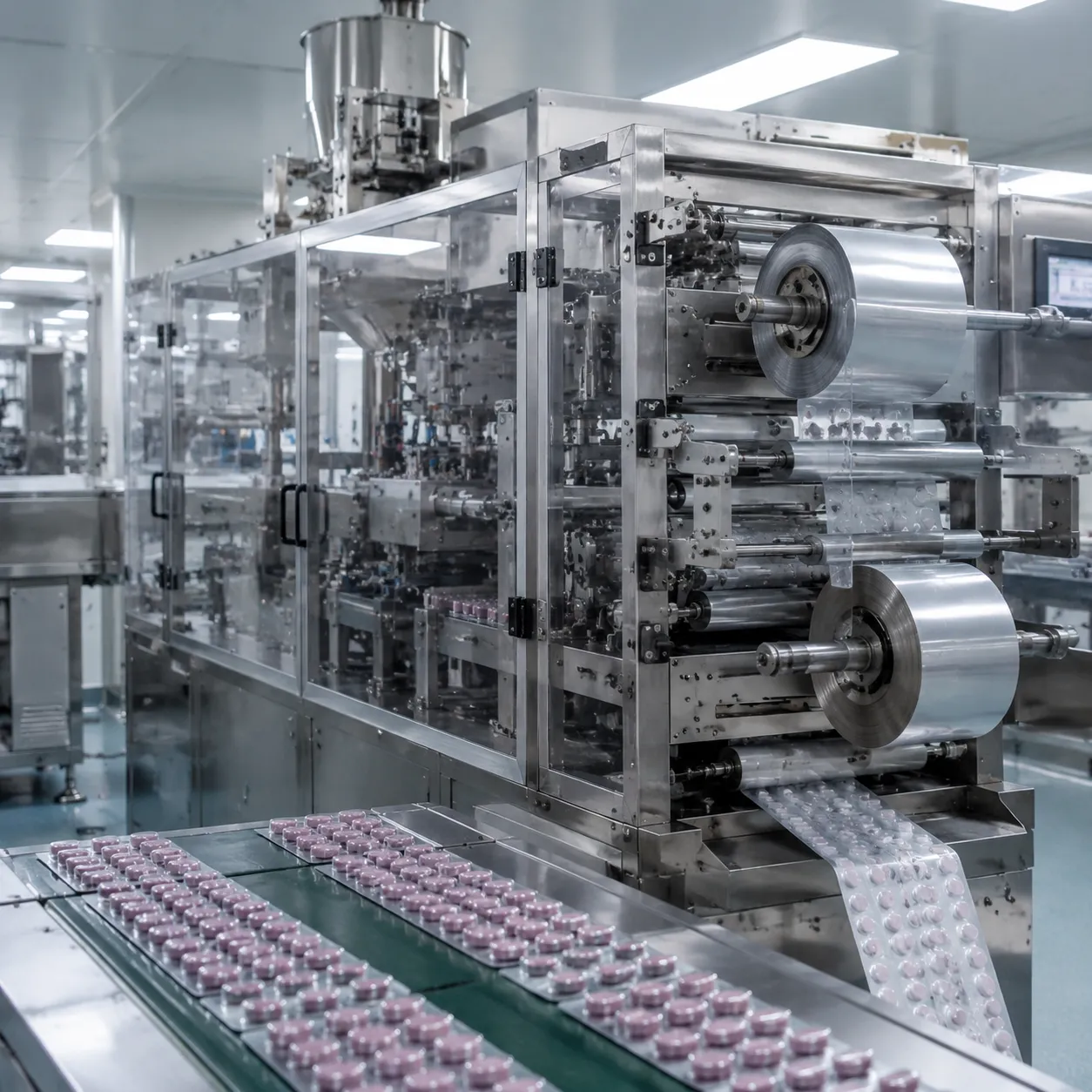
The choice must follow the validated formulation, intended release profile, handling needs, and packaging requirements. We treat coating selection as a pharmaceutical formulation decision and then configure downstream blister packing and cartoning equipment to protect tablet integrity.
Active Ingredient Sensitivity and Stability
Assess how the active ingredient responds to moisture, handling, storage, and the intended release conditions. The finished coating must remain intact throughout filling, blister sealing, cartoning, transport, and storage.
| Selection factor | Film coating | Enteric coating |
|---|---|---|
| Release requirement | Standard or formulation-defined release | Delayed intestinal dissolution |
| Protection priority | Surface integrity and handling stability | Stomach acid protection and coating integrity |
| Packaging focus | Gentle transfer and secure sealing | Controlled handling to avoid coating damage |
Target Site of Action in the GI Tract
Use film coating when it matches the product’s validated release profile. Select enteric coating when the formulation requires gastro-resistant protection before intestinal release. These requirements must be confirmed by the pharmaceutical development and quality teams.
For either format, accurate blister loading is essential. Qualipak blister packing systems provide up to 99.5% filling accuracy, with a tolerance below 0.5%, supporting reliable solid-dose packaging.
Patient Administration and Gastric Protection
Patient use instructions must remain clear and traceable through labeling and secondary packaging. For products requiring gastric protection or modified release, packaging should help prevent physical damage and preserve the validated tablet form.
Key downstream controls include:
- Secure blister sealing for tablet protection
- Manejo del producto de bajo impacto to preserve coating integrity
- Tamper-evident packaging for supply-chain control
- Integrated cartoning for instructions and product identification
- GMP, FDA, and WHO-aligned operation
- ISO 9001-certified quality management
Our modular pharmaceutical packaging lines support fast size changeovers, simplified cleaning, and integration with downstream cartoning equipment. This approach helps global manufacturers match coating requirements with reliable, compliant tablet packaging.
Enteric Coating vs. Film Coating: Choose Right Tablet Coating Packaging Machine Equipment
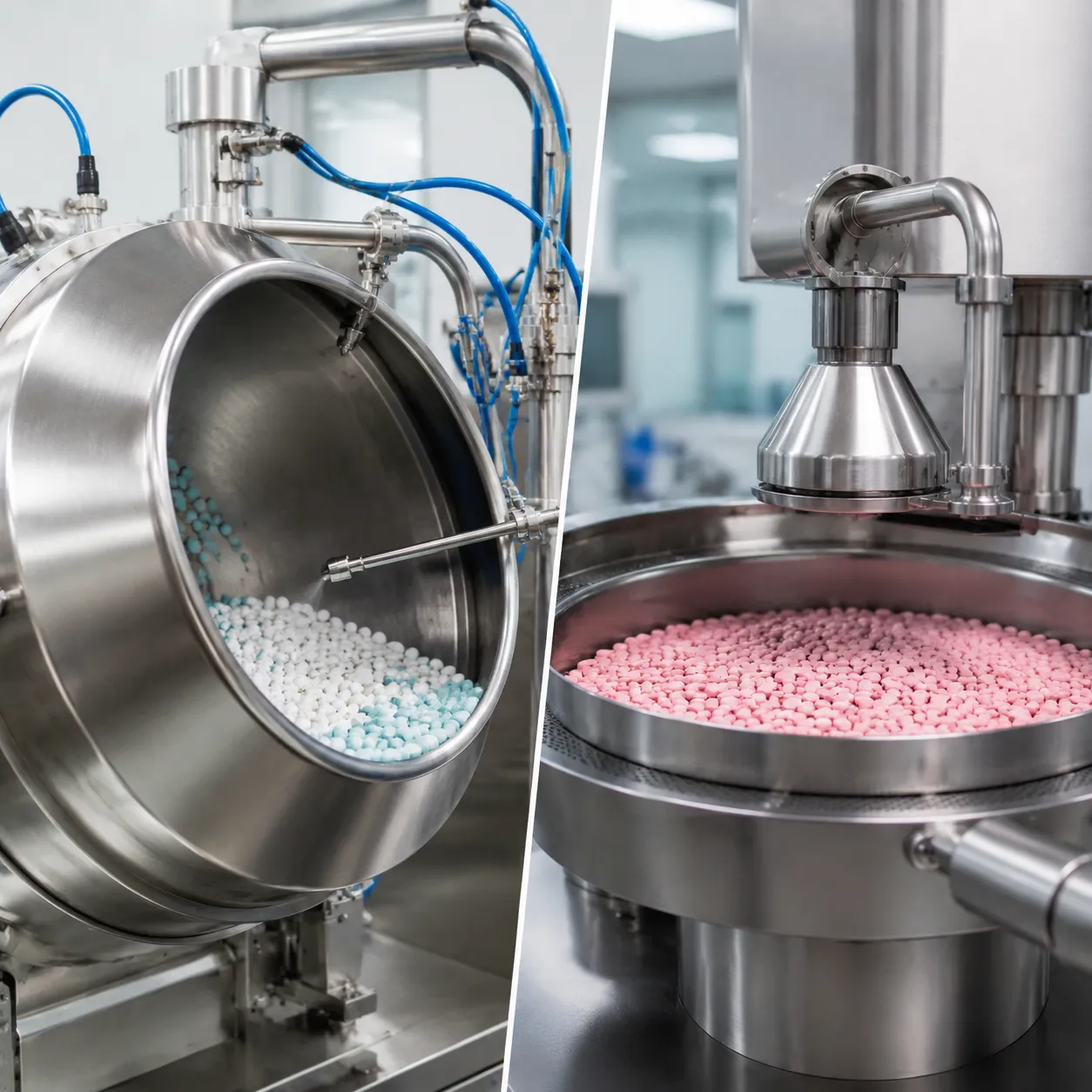
Tablet coating requirements must be defined separately from downstream packaging needs. Our verified pharmaceutical equipment scope covers blister packing, capsule filling, cartoning, and complete line integration rather than specific coating-pan configurations.
Equipment Requirements for Film Coating Processes
Film-coated tablets require controlled handling after coating to protect surface quality and physical integrity. Before selecting packaging equipment, we assess:
- Tablet dimensions and format
- Surface sensitivity during transfer
- Velocidad de producción requerida
- Blister and carton specifications
- Cleaning and changeover needs
- GMP, FDA, and WHO compliance requirements
Our blister packing systems provide up to 99.5% filling accuracy, helping maintain consistent tablet placement and secure presentation.
Specialized Machinery Considerations for Enteric Coating
Enteric-coated tablets may need careful downstream handling to preserve the finished coating. Equipment selection should focus on stable product transfer, accurate blister loading, reliable sealing, and physical protection through cartoning.
| Selection area | Practical requirement |
|---|---|
| Manipulación del producto | Minimize unnecessary impact and surface contact |
| Empaquetado en blíster | Support accurate loading and sealed protection |
| Higiene | Integrate CIP/SIP protocols where required |
| Changeovers | Use modular construction for faster format changes |
| Secondary packaging | Add cartoning and protective end-of-line systems |
| Cumplimiento | Meet ISO 9001, GMP, FDA, and WHO standards |
Specific coating materials, spray rate, airflow drying, temperature control, and coating thickness must be matched to the formulation and validated with the coating equipment supplier.
Key Features to Look For in Tablet Coating Systems
For global pharmaceutical projects, we prioritize equipment that supports:
- Consistent processing: Stable controls for repeatable production
- Modular engineering: Rapid assembly, easier cleaning, and quick size changeovers
- Hygienic operation: Support for CIP and SIP protocols
- Line compatibility: Integration with blister packing and cartoning equipment
- Accurate packaging: Up to 99.5% filling accuracy with tolerance below 0.5%
- Cumplimiento normativo: ISO 9001 certification and GMP, FDA, and WHO alignment
- Turnkey support: Layout review, customized engineering, FAT, commissioning, spare parts, and free sample testing
The right tablet coating packaging machine equipment must protect coating integrity while supporting efficient, compliant downstream production. Our modular pharmaceutical lines are built around reliable integration, straightforward operation, and long-term service support.
Preguntas Frecuentes
Can enteric-coated tablets be split or crushed?
Splitting or crushing can damage the coating and change its intended protection or release behavior. Follow the approved product instructions and applicable pharmaceutical guidance before altering any coated tablet.
How do polymer properties affect machine performance?
Coating properties can influence tablet surface sensitivity and downstream handling. We recommend packaging trials using actual samples to confirm smooth feeding, accurate counting, sealing performance, and coating integrity. Qualipak provides pruebas de muestras gratuitas for line evaluation.
How does tablet coating influence packaging machine selection?
Enteric- and film-coated tablets require controlled handling to limit abrasion and physical damage. Key selection points include:
- Empaquetado en blíster for secure, visible tablet protection
- Filling accuracy of up to 99.5%
- Modular construction for easier cleaning and faster size changes
- Soporte para CIP/SIP protocols
- Cumplimiento con ISO 9001, GMP, FDA, and WHO standards
- Cartoning integration for added transit protection
Our guide to selección de máquinas de envasado para su negocio covers the wider evaluation process for capacity, format, line layout, and operating needs. These factors are central to choosing the right tablet coating packaging machine equipment for global pharmaceutical production.